
Lewis County Unclaimed Money
Lewis County unclaimed money includes forgotten bank accounts, uncashed checks, old insurance proceeds, and other abandoned property belonging to local residents and businesses. Located in the Adirondack region of northern New York, Lewis County has Lowville as its county seat. The New York State Comptroller holds the bulk of these funds, while the County Clerk and Treasurer may have additional records linked to court proceedings, tax overpayments, and property transactions. Searching is free and there is no deadline to make a claim.
Lewis County Quick Facts
Where to Search for Unclaimed Money in Lewis County
Start with the New York State Comptroller's Office of Unclaimed Funds. This is the main database for unclaimed property in New York. Banks, insurance firms, utilities, and other companies that cannot locate the rightful owner of funds must turn them over to the state after a set dormancy period. The database gets updated each day with new records. You search by name. The system picks up close name matches, so even if your name was spelled a bit differently at the time, you should still find it.
Lewis County is a small, rural county, but that does not mean there is less unclaimed money per person. Smaller communities often have fewer chances to hear about the state's unclaimed funds program. People move away from rural areas and forget about old accounts or checks that were never cashed. The Comptroller's office returns more than $2 million statewide each day. There is no cost to search and no fee to file a claim.
The MissingMoney.com website from the National Association of Unclaimed Property Administrators lets you search across all states at once. This helps if you have lived elsewhere or if the company that owed you money was based in another state.
Lewis County Clerk and Local Records
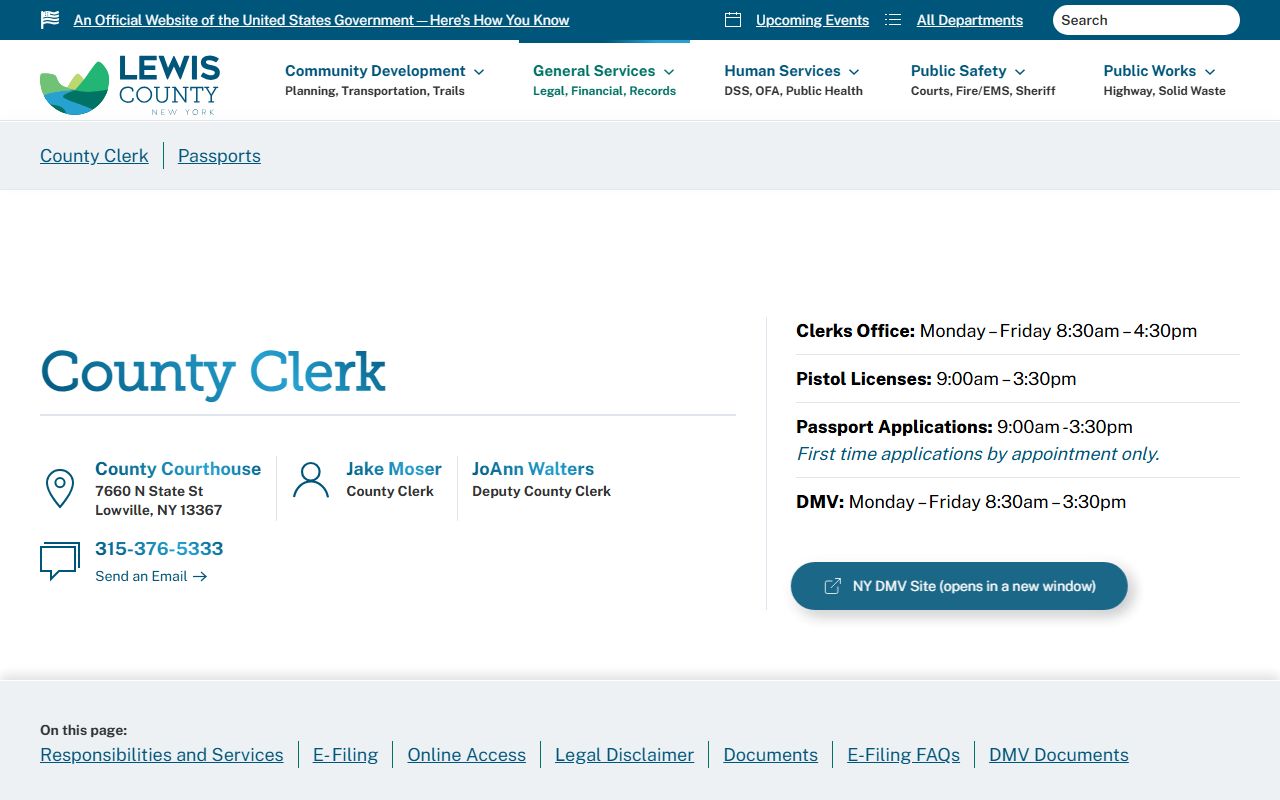
The Lewis County Clerk's Office is the official record keeper for the county. It is located at 7660 North State Street in Lowville. You can reach them at (315) 376-5333. The office handles land records, court records, and business filings. When mortgage satisfactions are recorded and excess funds cannot go to the right person, those funds stay with the Clerk until claimed. Surplus foreclosure proceeds work the same way.
If you had a court case in Lewis County and never collected a payment, the Clerk's office may still hold it. Settlement funds, bail refunds, and other court-ordered deposits that go uncollected turn into unclaimed money over time. Contact the office with your case details to check.
Lewis County Treasurer and Tax Refunds
The Lewis County Treasurer collects property taxes and manages county funds. The office is at 7660 North State Street, Lowville, and can be reached at (315) 377-2000. Tax overpayments, duplicate payments, and refunds from exemptions can all lead to unclaimed money. When the Treasurer cannot deliver a refund, it eventually goes to the state as unclaimed property.
Property owners in Lewis County should keep their address current with the Treasurer's office. This simple step helps prevent refunds from going unclaimed. If you have moved or changed your name, update your information with both the Treasurer and the Clerk. These offices work on separate systems, so updating one does not automatically update the other.
Estates and Surrogate's Court in Lewis County
The Lewis County Surrogate's Court handles probate and estate matters. It is at 7660 North State Street in Lowville, and you can call (315) 377-2000 for information. When someone dies and their estate includes assets that cannot be distributed because heirs are missing or unknown, those funds may end up with the court or the state as unclaimed property.
Estate records in the Surrogate's Court are open to the public. They contain asset inventories and lists of beneficiaries. If you think you may be an heir to an estate in Lewis County, searching these records is a good first step. Guardianship and trust accounts that go unclaimed also fall under this court's oversight. The staff can help you figure out if any funds are being held under your name or a family member's name.
Types of Unclaimed Money in Lewis County
Forgotten bank accounts top the list. Old savings and checking accounts with no activity for five years get turned over to the state under the New York Abandoned Property Law. Safe deposit box contents follow the same rule. Uncashed payroll checks, insurance claim payments, and refund checks are also common sources.
Life insurance proceeds often go unclaimed. Under the law, when an insurer knows the insured person died and no one claims the payout within three years, the funds go to the Comptroller. Stocks, bonds, and mutual fund shares with no owner contact for three years become unclaimed too. Utility deposits from old electric, gas, or phone accounts are another source. The Department of Financial Services oversees the banking and insurance organizations that hold these funds before they report them to the state.
How to File a Claim
Visit the Comptroller's search page. Type your name. Review any matches. Select the ones you want to claim. The site will walk you through the form. You need a photo ID, proof of your Social Security number, and proof of your current address such as a utility bill from the last 90 days.
For claims on behalf of someone who has passed away, you will also need a death certificate, proof of your relationship, and estate documents like Letters Testamentary or a small estate affidavit. Business claims require formation documents and proof of authority. Simple claims go through in weeks. Complex ones may take months. No fees at any point. Be wary of third-party services that charge for something you can do for free.
Federal Sources of Unclaimed Money
Check federal sources too. The IRS holds unclaimed tax refunds. The New York Department of Taxation and Finance holds unclaimed state refunds. The Treasury Hunt tool lets you find matured savings bonds that were never cashed. The FDIC maintains a database for deposits from banks that have closed. All free to search and claim.
Nearby Counties
Unclaimed money can end up in a neighboring county if you lived or worked there. Check these counties too.