
Find New York Unclaimed Money Online
New York holds billions in unclaimed money that could belong to you. The State Comptroller's Office of Unclaimed Funds keeps a free public database where you can search by name for lost bank accounts, uncashed checks, old stock shares, and forgotten insurance payments. The search takes just a few seconds. There is no cost to file a claim. New York never takes ownership of these funds, so you can claim your unclaimed money at any time with no deadline. About one in ten New Yorkers has unclaimed money waiting. Start your search now to see if any of it is yours.
New York Unclaimed Money Overview
Where to Search for New York Unclaimed Money
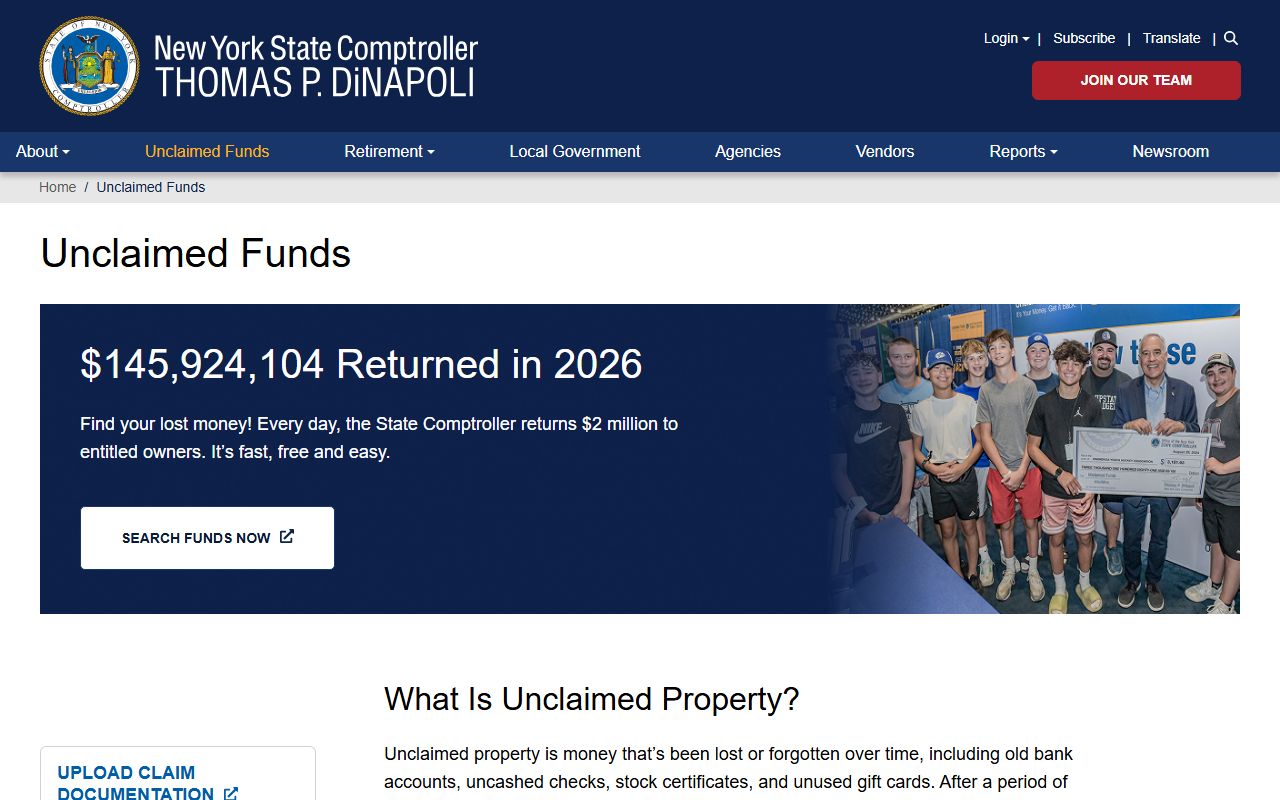
The main place to search for New York unclaimed money is the New York State Comptroller's Office of Unclaimed Funds. This is the official New York unclaimed money database. New records get added each day as banks, insurance firms, and other holders turn over abandoned property to the New York State Comptroller. The office returns more than $2 million in unclaimed funds every single day to New York residents who find a match.
You search by name. Type your first and last name into the New York unclaimed money search box. The system shows any unclaimed funds linked to that name. It also picks up close name matches, so small differences in how your name was recorded should not stop you from finding your lost money. You can search for unclaimed money for yourself, a relative, a friend, or a New York business. The whole thing is free. New York does not charge to search for unclaimed funds or to file a claim.
Beyond the New York state database, several other sources hold unclaimed money for New York residents. The National Association of Unclaimed Property Administrators runs MissingMoney.com, which lets you search for unclaimed funds across all states at once. This is useful if you have lived outside New York or if a company that owed you money was based in another state. The New York State Unified Court System also holds unclaimed court funds from settlements, condemnation awards, and other New York legal proceedings under Article VI of the Abandoned Property Law.
Types of Unclaimed Money in New York
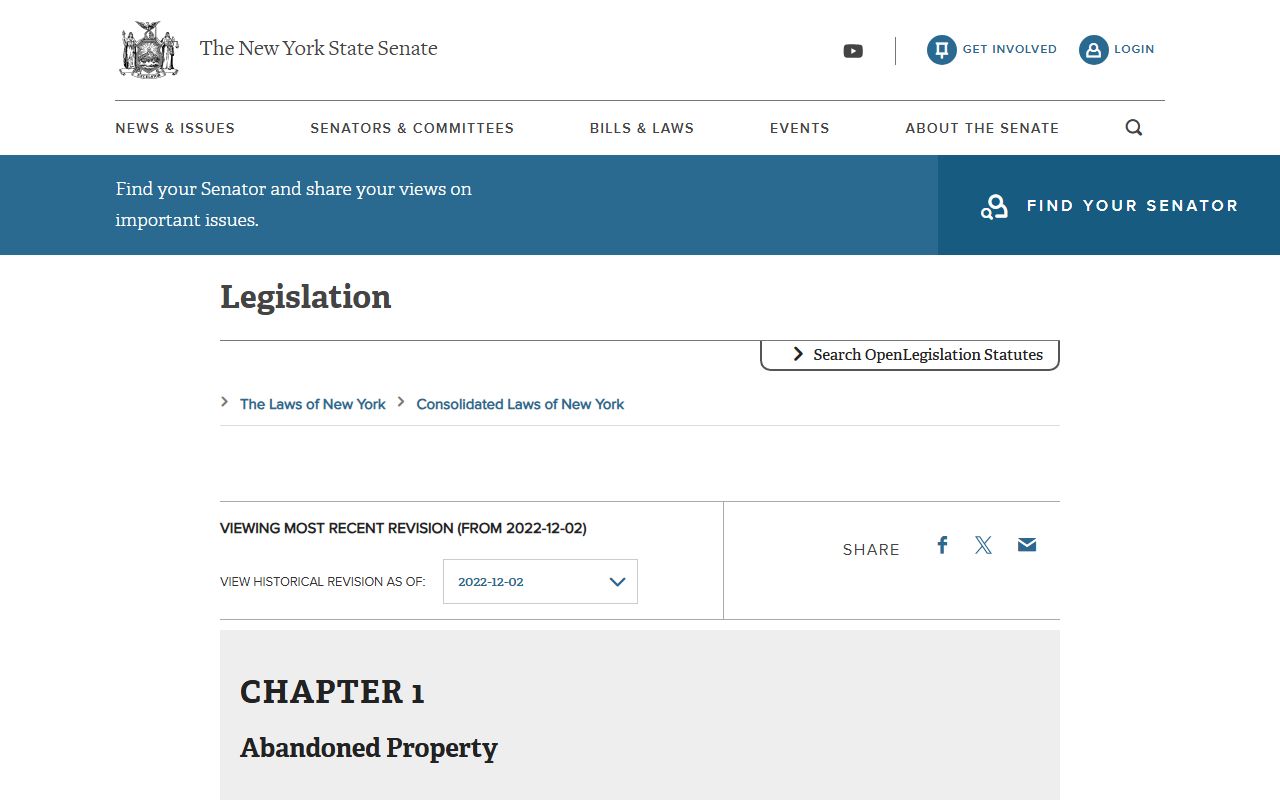
New York unclaimed money comes from many sources. The most common type of unclaimed funds is a forgotten bank account. Old savings accounts, checking accounts, and certificates of deposit that sit with no activity for five years get turned over to New York State under the Abandoned Property Law. Article III of the law sets the rules for banking organizations in New York specifically. Safe deposit box contents also fall under this rule. If a box goes unpaid and untouched, the bank drills it open, inventories the items, and sends the unclaimed property to the state.
Uncashed checks are another big source. Payroll checks, insurance claim payments, refund checks, and vendor payments all become unclaimed money if the person they were written to never cashes them. These checks typically become abandoned after three to five years depending on the type. Stocks, bonds, and mutual fund shares also end up as unclaimed property. Under Article V of the Abandoned Property Law, securities with no owner contact for three years must be reported. Dividend and interest payments tied to those securities follow the same rule.
Life insurance proceeds are a major but often overlooked category. Under Article VII, when an insurance company knows the insured person has died but the beneficiary has not come forward within three years, the proceeds become unclaimed. Utility deposits from old electric, gas, water, or phone accounts are covered under Article IV. Gift cards, prepaid debit cards, and stored value cards round out the list. The New York Department of Financial Services oversees the banking and insurance organizations that hold these funds before they are reported to the state.
How to Claim Unclaimed Money in New York
The claim process is simple. Start at the Comptroller's unclaimed funds page. Search your name and review any matches. Select the ones that look like yours. The system walks you through a claim form where you give your full legal name, address, Social Security number, and contact info.
For a basic individual claim, you need a copy of a government-issued photo ID like a driver's license or passport. You may also need proof of your Social Security number from a W-2 or tax return. The state wants to see proof of your current address too, usually a utility bill or bank statement from the last 90 days. Simple claims with all the right paperwork can go through in a few weeks. More complex ones may take a few months.
If you are claiming unclaimed money for someone who died, you need more paperwork. A certified death certificate is required. You also need proof of your relationship to the person, like a marriage or birth certificate. Estate documents such as Letters Testamentary or Letters of Administration may be needed depending on the value. For small estates under $50,000, a small estate affidavit may work. Business claims need Articles of Incorporation and proof you can act for the company.
The Comptroller's Office has locations in Albany and New York City where you can get help in person. You can also mail your claim. There is no fee to claim. Be careful of third-party services that charge to find or claim unclaimed money for you. The SEC warns about unclaimed property scams where people charge upfront fees for something you can do yourself for free.
Federal Unclaimed Money for New York Residents
The New York State database is not the only place to check for unclaimed money. Several federal agencies hold unclaimed funds for New York residents too. The IRS reports that millions in tax refunds go unclaimed each year across New York. If you did not file a return but had taxes taken out of your pay, you may have unclaimed money waiting. You have three years from the filing deadline to claim it. The IRS "Where's My Refund?" tool lets you check the status of any pending refund.
The New York Department of Taxation and Finance holds unclaimed New York State tax refunds as well. These unclaimed funds happen when a refund check goes to an old address or when someone does not file a required return even though they had New York state taxes withheld. Refundable credits like the Empire State Child Credit and the New York Earned Income Credit can also result in unclaimed refunds. You have three years from the original due date to claim them.
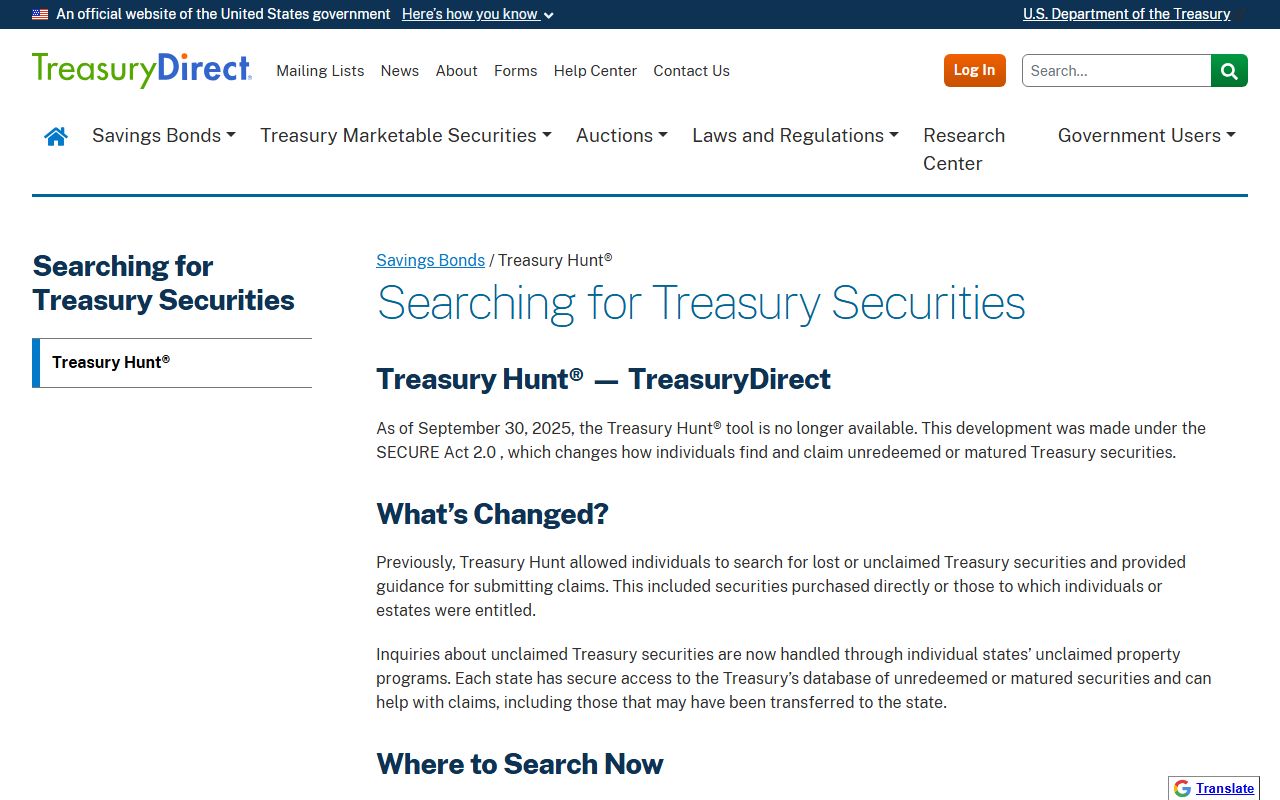
Old savings bonds are a common source of lost money. The Treasury Hunt tool from the Bureau of the Fiscal Service lets you search for matured bonds that stopped earning interest but were never cashed. Billions of dollars in Series E, EE, and I bonds remain unredeemed across the country. You search by Social Security number. If your bonds were lost or stolen, you can file Form PD F 1048 to make a claim.
The Pension Benefit Guaranty Corporation holds over $300 million for more than 30,000 people who are owed pension benefits from terminated plans. The average unclaimed benefit is over $10,000. The FDIC keeps a database of unclaimed deposits from banks that have closed. Both are free to search.
Avoid Unclaimed Money Scams
Every search for New York unclaimed money through official channels is free. No state or federal agency charges a fee to look up or claim unclaimed funds. If someone contacts you saying they found unclaimed money in your name and asks for an upfront payment, that is a scam. Legitimate New York unclaimed property programs do not work that way.
Watch out for pressure tactics too. Scammers push you to act fast. They may ask for bank account numbers or credit card info. The real process is not rushed. You search at your own pace, gather your documents, and submit a claim when you are ready. Some people choose to use paid "finder" services, but the Comptroller's Office warns that you can do everything those services do on your own at no cost. If you do use a third party, check their credentials first and make sure you understand what they charge.
How Unclaimed Money Gets to the State
Banks, insurance companies, utilities, and other businesses that hold money for New York residents are called "holders" under New York law. When a holder cannot reach the owner of an account or payment for a set dormancy period, the law says they must turn that unclaimed money over to the New York State Comptroller. This is called escheatment. The dormancy period depends on the type of unclaimed property. Bank accounts go dormant after five years of no activity. Life insurance proceeds become unclaimed funds three years after the company learns of the insured person's death.
Before sending unclaimed money to the state, holders in New York must try to find the owner. The New York Abandoned Property Law requires due diligence for accounts worth $50 or more. The holder sends a letter to the last known address at least 60 days before filing. This letter says what the unclaimed property is, that it will be sent to New York State, and what you can do to stop that from happening. If the holder does not hear back, the unclaimed money goes to the New York Comptroller's Office.
The New York reporting deadline is March 1 for most holders and May 1 for life insurance companies. Even holders with no unclaimed property must file a negative report with New York. The Comptroller's Office audits New York businesses to make sure they follow the unclaimed funds rules. Penalties for not reporting can be steep. Holders can use a voluntary disclosure program if they find past mistakes in their unclaimed money reporting.
Browse New York Unclaimed Money by County
Each of New York's 62 counties has local offices that may hold unclaimed funds. County clerks, treasurers, and Surrogate's Courts all deal with money that goes unclaimed. Pick a county below to find local resources for unclaimed money in that area.
Unclaimed Money in Major New York Cities
Residents in larger cities and towns may have unclaimed money held at the city, county, or state level. Pick a city below to find out where to search for unclaimed money in that area.