
Access Colonie Unclaimed Money
Colonie unclaimed money is held by the New York State Comptroller, Albany County, and the town government. As the largest town in Albany County by population, Colonie has a significant amount of unclaimed funds tied to dormant accounts, uncashed checks, old insurance payouts, and forgotten utility deposits. The Town Comptroller handles local finances while the state manages the bulk of reported unclaimed property. Every search is free and New York holds these funds with no time limit at all.
Colonie Quick Facts
Where to Search for Unclaimed Money in Colonie
Start with the New York State Comptroller's Office of Unclaimed Funds. This is the main state database. It holds billions in unclaimed property from every corner of New York. Type in your name and see if anything comes up. The search is free and takes seconds.
The Abandoned Property Law sets the rules. Banks must report accounts dormant for five years. Insurance companies report unclaimed life insurance proceeds three years after learning the insured has died. Utility companies like National Grid must turn over old deposits under Article IV. These rules apply statewide, but Colonie's large population means a lot of local money ends up in the system each year.
Search MissingMoney.com too. It covers multiple states at once. Many Colonie residents work for the State of New York or have ties to nearby states like Massachusetts, Connecticut, or Vermont. Funds from any of those states could be waiting. It is a fast, free search.
Colonie Town Offices and Unclaimed Funds
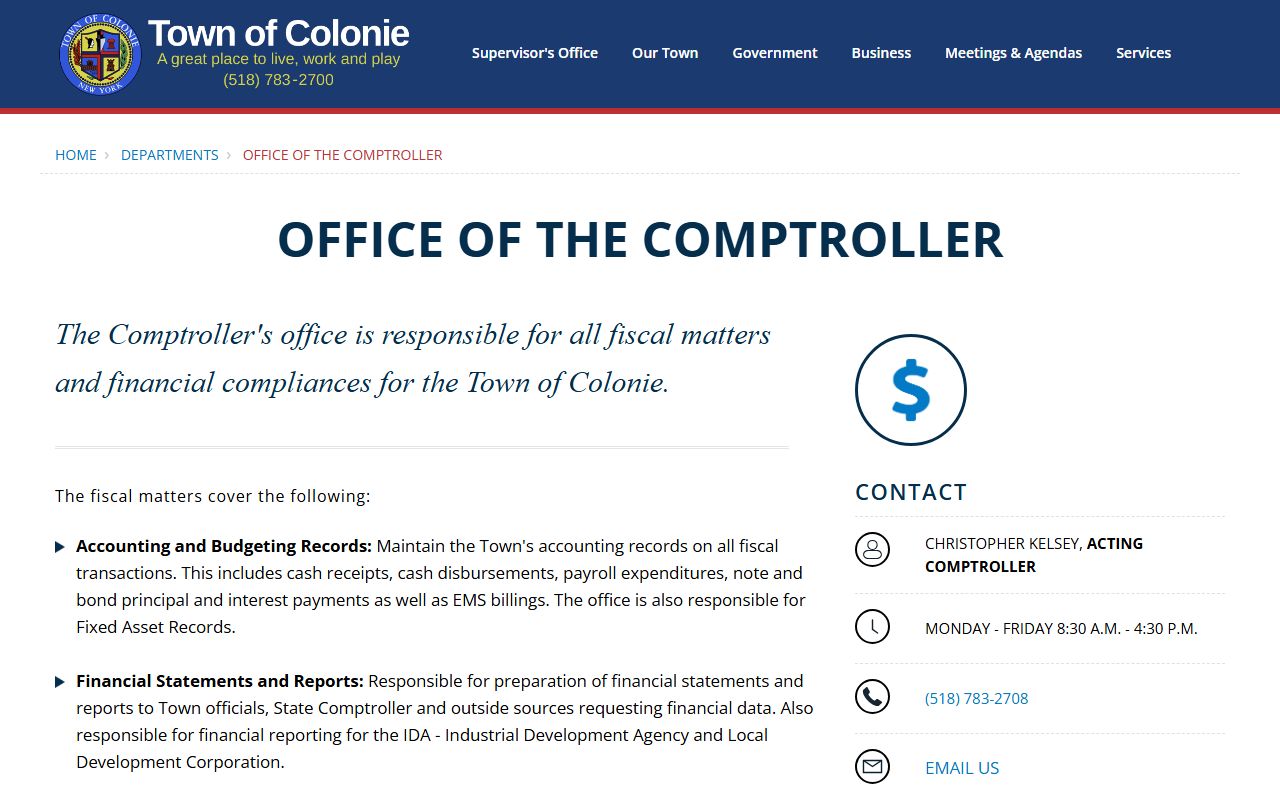
The Town of Colonie Comptroller manages all town finances. Checks issued by the town that go uncashed become unclaimed funds. Tax refunds and overpayments that are never collected also accumulate. The comptroller can tell you if any town-level money is on file in your name. Call or visit Town Hall to start that inquiry.
Albany County is another source of unclaimed funds for Colonie residents. The county comptroller tracks county-level payments. Surplus proceeds from tax foreclosure sales on Colonie properties sit unclaimed with the county when the former owner does not come forward. Court deposits from Albany County courts can go unclaimed as well, including settlement funds, bail refunds, and other payments held by the court system.
Being right next to the state capital gives Colonie residents easy access to the Comptroller's Albany office for in-person assistance with claims. The Department of Financial Services also handles funds from financial companies that have closed or merged. If you had accounts with firms that no longer exist, the state may hold your money.
How to Claim Unclaimed Money
Go to the Comptroller's website. Search your name. Select matches and complete the claim form. You need a government photo ID, proof of your Social Security number, and a recent utility bill or bank statement to verify your address. Simple claims with all required documents process in a few weeks.
Claiming for a deceased person requires extra steps. You will need a certified death certificate, proof of relationship to the owner, and estate documents such as Letters Testamentary from Surrogate's Court. Estates under $50,000 may qualify for a simplified small estate affidavit instead of full probate. The Comptroller's Albany office, conveniently close to Colonie, can assist with complex claims in person.
There is no charge to file a claim. No government agency asks for money to release your funds. If someone contacts you demanding payment to recover unclaimed money, that is a scam. Always use the official state website.
Federal Sources of Unclaimed Money
The IRS holds unclaimed federal tax refunds. You get three years from the filing deadline. The New York Department of Taxation and Finance holds state-level refunds that were never picked up. State employees based in the Capital Region should double-check both of these.
Old savings bonds can be found through the Treasury Hunt tool. The FDIC tracks deposits from banks that closed. The Capital Region has had its share of bank consolidations, so checking this database makes sense for long-time Colonie residents.
Common Types of Unclaimed Property
Bank accounts are the largest single source. Savings, checking, and CD accounts that sit dormant for five years must be reported to the state. Credit union accounts follow the same rule. Safe deposit boxes that go unclaimed are inventoried by the bank, and the contents are sent to the Comptroller. Cash, coins, jewelry, and documents are all held until someone claims them.
Uncashed checks make up a big share of unclaimed funds. Payroll checks, insurance claim payments, refund checks, and vendor payments that are never deposited become unclaimed. Many state employees based in the Capital Region have uncashed travel reimbursements or other work-related payments. Stocks, bonds, and mutual fund shares with no owner contact for three years also get reported along with any dividends or interest owed.
Life insurance proceeds get overlooked more than people realize. When the insured dies and the beneficiary does not file a claim within three years, the money goes to the state. Utility deposits from National Grid and other providers become unclaimed when customers move and do not request their deposit back. Court-held funds, escrow balances, and gift card balances are all part of the mix. Searching takes just a minute and could turn up money you did not know about.
Watch Out for Scams
Every official search is free. No legitimate agency charges for lookups or claims. Be wary of third-party companies that charge fees to recover money you can get yourself at no cost. Go directly to the state websites. That is the safest and fastest way to search.
Albany County Unclaimed Money
Colonie is part of Albany County. Visit the county page for more on local offices and resources.
Nearby Cities
Search for unclaimed money in other Capital Region communities.